


The financial world stands at a critical crossroads as major stock exchanges express deep concern over the U.S. Securities and Exchange Commission’s proposed regulatory relief for crypto firms offering tokenized stocks. This clash between traditional financial institutions and blockchain-based innovation could reshape how millions of investors access the stock market.
SEC Tokenized Stock Exemptions Controversy
The debate surrounding SEC tokenized stock exemptions has intensified following a strongly worded letter from the World Federation of Exchanges (WFE) to the SEC’s Crypto Task Force. The organization, representing global giants including Nasdaq, Cboe, and CME Group, stated they are “alarmed at the plethora of brokers and crypto-trading platforms offering or intending to offer so-called tokenized US stocks.”
At the heart of this controversy lies a fundamental question: Should crypto platforms receive special regulatory treatment to offer blockchain-based versions of traditional stocks? The SEC tokenized stock exemptions proposal, championed by SEC Chair Paul Atkins, aims to accelerate blockchain innovation through an “innovation exemption” framework that would grant temporary regulatory relief to qualified firms.
What Are Tokenized Stocks?
Tokenized stocks represent digital versions of traditional securities that exist on blockchain networks. These blockchain-based assets offer several theoretical advantages over conventional stock trading:
- 24/7 Trading Availability: Unlike traditional markets limited to business hours, tokenized stocks can trade around the clock
- Faster Settlement Times: Blockchain technology enables near-instant settlement compared to the standard T+2 settlement cycle
- Fractional Ownership: Investors can purchase portions of high-priced shares with minimal capital requirements
- Lower Transaction Costs: Elimination of intermediaries could reduce trading fees
- Global Accessibility: Investors worldwide can access U.S. equities without geographical restrictions
However, critics argue these products “mimic” traditional stocks without providing equivalent investor protections, shareholder rights, or regulatory oversight.
Why Major Exchanges Oppose SEC Tokenized Stock Exemptions
The World Federation of Exchanges outlined multiple concerns in their November 21 letter to regulators, emphasizing that while they support innovation, broad exemptions present significant risks.
Investor Protection Concerns
Traditional stock exchanges argue that tokenized stocks marketed as equivalent to actual shares mislead investors about their rights and protections. Key concerns include:
Lack of Shareholder Rights: Most tokenized stockholders do not receive voting rights or direct ownership of the underlying company. They gain price exposure without the legal benefits of traditional shareholders.
Misleading Marketing: Products are often presented as “stock tokens” or equivalents when they fundamentally differ from securities traded on regulated exchanges.
Insufficient Legal Protections: The regulatory framework for tokenized assets remains incomplete, exposing investors to potential losses without recourse available through traditional channels.
Market Integrity Threats
The WFE warns that SEC tokenized stock exemptions could undermine decades of carefully constructed market safeguards:
Fragmented Price Discovery: Trading activity split between regulated exchanges and lightly-regulated crypto platforms could create price discrepancies and weaken the efficient market mechanism.
Uneven Regulatory Playing Field: Crypto firms operating under exemptions would compete against fully-regulated exchanges while shouldering fewer compliance costs and operational requirements.
Surveillance Gaps: Traditional exchanges maintain sophisticated monitoring systems to detect manipulation and fraud. Exempted platforms may lack equivalent capabilities.
Systemic Risk: As trading volume migrates to less-regulated venues, the financial system’s overall stability could be compromised.
The Push for Tokenized Stocks: Who’s Involved?
Multiple major platforms are aggressively pursuing tokenized stock offerings, creating momentum that traditional exchanges view as threatening:
Robinhood’s European Expansion
In June 2025, Robinhood Markets launched tokenized versions of over 200 U.S. stocks and ETFs for European investors. The fintech giant announced plans to bring these products to American customers, representing a direct challenge to traditional brokerages and exchanges. Robinhood even proposed tokenizing shares in private companies like OpenAI, though OpenAI stated it did not endorse the offering.
Kraken’s xStocks Platform
Crypto exchange Kraken introduced xStocks, a tokenized equities platform that has seen explosive growth. Within four weeks of launch, xStocks surpassed $300 million in trading volume across multiple platforms, including Bybit, Kraken, and Solana-based decentralized exchanges. The platform’s market capitalization grew from $9 million to $55.5 million within two months, representing 516% growth.
Coinbase’s “Everything Exchange” Ambition
Coinbase sought SEC approval to offer tokenized stocks, with Legal Chief Paul Grewal describing it as a “huge priority.” The company envisions an “everything exchange” bringing stocks, derivatives, real-world tokens, and other assets on-chain, positioning itself against traditional financial intermediaries.
Traditional Exchanges Join the Movement
Interestingly, even established players are exploring tokenization. Nasdaq filed a rule change request with the SEC in September to enable listing tokenized stocks on its platform, signaling that traditional markets recognize the technology’s potential even while opposing broad exemptions for competitors.
SEC Chair Paul Atkins’ Vision for Innovation Exemptions
SEC Chair Paul Atkins has championed a more permissive regulatory approach through his “Project Crypto” initiative, which aims to position America as the “crypto capital of the world.”
The Innovation Exemption Framework
Atkins’ proposed SEC tokenized stock exemptions would operate as a regulatory sandbox, allowing qualified firms to pilot blockchain-based securities products under SEC supervision. The framework would include several conditions:
Disclosure Requirements: Platforms must provide comprehensive information about products, services, operations, conflicts of interest, and smart contract risks.
Recordkeeping and Reporting: Exempted firms would maintain detailed records and submit regular reports to the SEC staff.
Monitoring and Examination: The SEC would conduct ongoing oversight and examinations of participating platforms.
Financial Resources: Firms must demonstrate adequate capitalization and financial stability.
Volume and Product Limitations: Initial exemptions may restrict the number of tokenized securities and trading volumes, with potential increases for successful participants.
Political and Economic Motivations
Atkins’ approach aligns with broader political objectives to accelerate U.S. blockchain adoption and prevent innovation from migrating offshore. The Trump administration’s vision emphasizes making America the global leader in crypto technology, viewing regulatory flexibility as essential to competitiveness.
Commissioner Hester Peirce, often called “crypto mom” for her industry-friendly positions, has endorsed the sandbox approach while emphasizing that tokenized securities remain subject to existing securities laws. She stated: “As powerful as blockchain technology is, it does not have magical abilities to transform the nature of the underlying asset. Tokenized securities are still securities.”
The WFE’s Alternative Proposals
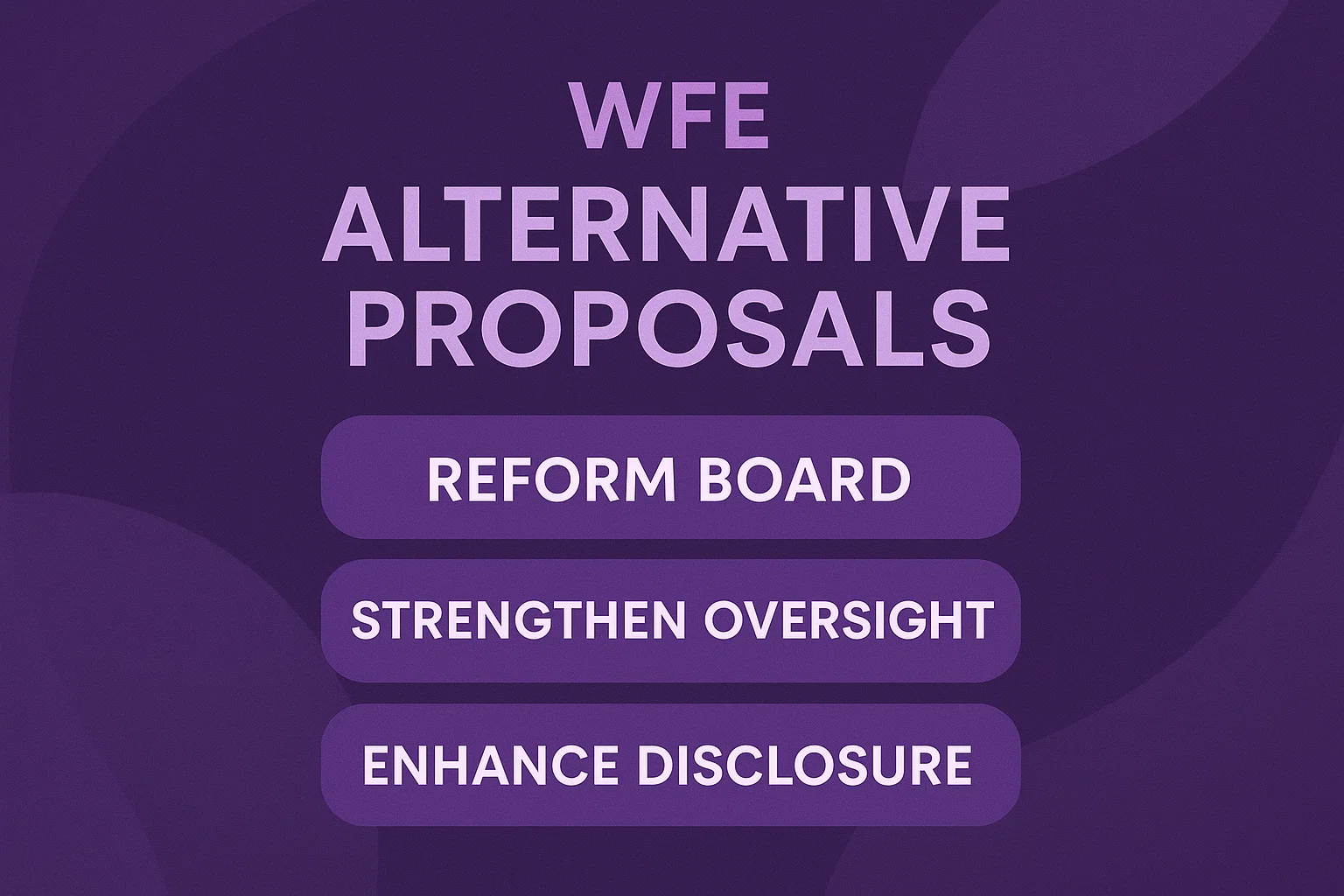
Rather than opposing innovation entirely, the World Federation of Exchanges proposed several alternatives to broad SEC tokenized stock exemptions:
Targeted, Not Broad Relief
The WFE emphasized that exemptive relief should be “exercised in a targeted manner and not applied as a means to circumvent or fast-track exemptions to longstanding regulatory requirements.” They advocate for case-by-case evaluations rather than sweeping exemptions.
Public Rule Filing Process
Instead of granting exemptions quietly, the WFE recommends the SEC conduct public rule filings that allow industry feedback and transparent debate about changes to market structure.
Regulated Sandbox Regime
The organization supports creating a formal sandbox framework with clear boundaries, time limits, and performance metrics. This would allow innovation while maintaining investor protections and enabling regulators to collect data before broader deployment.
Integration with Existing Infrastructure
The WFE suggests that tokenization could occur within existing market structures. Clearinghouses like the DTCC could adopt blockchain-based settlement while maintaining current trading, monitoring, and risk-management functions.
Tokenized Stocks: Benefits vs. Risks Analysis
Potential Advantages
Democratized Access: Lower minimum investments enable retail investors to access expensive stocks and diversify portfolios that were previously out of reach.
Operational Efficiency: Blockchain technology reduces settlement times from days to minutes, decreasing counterparty risk and capital requirements.
DeFi Integration: Tokenized stocks can be used as collateral in decentralized lending protocols, staked in liquidity pools, or integrated with other DeFi applications—use cases impossible with traditional securities.
Global Market Access: Investors in countries with limited access to U.S. markets can participate more easily through crypto exchanges.
Programmable Securities: Smart contracts enable automatic dividend distribution, compliance enforcement, and other programmable features.
Significant Risks
Smart Contract Vulnerabilities: Bugs or exploits in underlying code could result in irreversible losses without traditional safeguards.
Custodial Dependency: The security of tokenized stocks depends on multiple parties—custodians holding underlying shares, issuers maintaining proper backing ratios, and platforms operating reliably.
Liquidity Challenges: Despite promises of 24/7 trading, tokenized stock markets often experience thin liquidity, especially during traditional market hours when market makers cannot hedge positions. This creates wider spreads and price volatility.
Regulatory Uncertainty: The legal treatment of tokenized assets continues evolving, creating potential for sudden policy changes that could affect holdings.
Irrevocable Transactions: Like cryptocurrency transactions, tokenized stock trades may be irreversible, eliminating protections available in traditional markets.
Limited Shareholder Rights: Most tokenized products omit voting rights, dividend claims (or provide synthetic alternatives), and other shareholder protections.
International Regulatory Landscape
The debate over SEC tokenized stock exemptions reflects a global regulatory divergence:
Europe’s Approach
The European Union’s Markets in Crypto-Assets Regulation (MiCA) provides a comprehensive framework for tokenized securities, offering more regulatory clarity than the U.S. This has attracted platforms like Robinhood to launch European offerings before American ones.
Switzerland’s Leadership
Switzerland has emerged as a tokenization pioneer, already recognizing tokenized securities and allowing direct blockchain-based recording of ownership. The country’s progressive stance has attracted numerous blockchain finance projects.
Abu Dhabi’s Framework
The Financial Services Regulatory Authority in Abu Dhabi Global Market published detailed frameworks and licensing regimes specifically for security tokens, positioning the emirate as a tokenization hub.
Asia’s Growing Interest
Japanese financial giant SBI Holdings partnered with Singapore-based Startale in August 2025 to develop an institutional-grade tokenized stock platform focusing on 24/7 trading with near-instant settlement. SBI oversees over $74 billion in assets and serves 65 million customers globally.
Market Growth and Current State
Despite regulatory challenges, the tokenized stock market has demonstrated significant growth:
Market Capitalization
The tokenized stock market grew 26.6% in 2025, expanding from $284.7 million to $360.5 million. While still a fraction of traditional equity markets, this growth trajectory has attracted attention from both innovators and regulators.
Trading Volume
xStocks achieved $3.2 billion in cumulative trading volume within months of launch, demonstrating substantial demand for tokenized equity products.
Industry Projections
Financial services firm HSBC projects tokenized assets could reach $24 trillion by 2027, driven by increased accessibility, DeFi integration, and regulatory acceptance. If realized, this would represent a fundamental transformation of financial markets.
What This Means for Investors
For Retail Investors
The SEC tokenized stock exemptions debate will determine how average investors access markets in the coming years:
Potential Opportunities: If exemptions proceed with appropriate safeguards, retail investors could gain unprecedented access to fractional shares, 24/7 trading, and DeFi integration.
Protection Concerns: Without proper oversight, investors may face misleading products, inadequate recourse for losses, and complex technical risks they don’t fully understand.
Due Diligence Requirements: Investors considering tokenized stocks should carefully evaluate whether products provide actual ownership or synthetic exposure, understand custodial arrangements, verify regulatory status, and assess platform security measures.
For Traditional Financial Institutions
Banks, brokerages, and asset managers face strategic decisions:
Competitive Pressure: As crypto platforms offer innovative products with lower fees, traditional institutions must adapt or risk losing market share.
Collaboration Opportunities: Rather than competing directly, established firms could partner with blockchain platforms or integrate tokenization within existing regulatory frameworks.
Regulatory Advocacy: Traditional institutions are actively lobbying regulators to ensure competitive equity, arguing that if tokenization proceeds, all participants should meet equivalent standards.
The Path Forward: Finding Middle Ground
Balancing Innovation and Protection
The conflict over SEC tokenized stock exemptions represents a broader tension between technological progress and investor safety. Several principles could guide a balanced approach:
Proportional Regulation: Regulatory requirements should match the risks posed by different business models, rather than applying one-size-fits-all rules or granting blanket exemptions.
Transparent Standards: Whatever framework emerges should be clearly defined, publicly available, and consistently applied across participants.
Phased Implementation: Starting with limited pilot programs allows regulators to gather data, assess risks, and adjust policies before broader deployment.
International Coordination: Given the global nature of crypto markets, coordinated approaches across jurisdictions would prevent regulatory arbitrage and protect investors.
Timeline and Expected Developments
SEC Chair Atkins indicated that the innovation exemption framework could arrive within 2025. The timing suggests:
Near-Term Decisions: The SEC will likely issue guidance or implement initial exemptions in the coming months, potentially reshaping the competitive landscape.
Industry Response: Traditional exchanges may escalate their opposition through legal challenges, additional regulatory filings, or competitive tokenization offerings.
Market Evolution: Early movers in tokenized stocks will test regulatory boundaries, with their successes and failures informing broader policy.
Congressional Involvement: Given the high stakes, Congress may weigh in through hearings or legislation addressing digital asset regulation.
Expert Perspectives on SEC Tokenized Stock Exemptions
Industry Leaders Weigh In
Kanny Lee, co-founder and CEO of SecondSwap, a secondary markets trading protocol, stated: “The SEC has a real chance to create a safe path for tokenized stock trading with a focused framework. Tokenization shouldn’t create two different classes of exchanges. If a crypto platform wants to offer stock-linked products, the expectations should match traditional venues.”
WFE CEO Nandini Sukumar emphasized that concerns reflect broader financial sector worries, with companies whose stocks are being tokenized expressing unease about products they neither control nor endorse.
Academic Analysis
Professor Hilary Allen from American University Washington College of Law noted: “The news cycle for crypto is all about representing traditional financial assets on a blockchain,” highlighting how the industry frames tokenization as revolutionary, while critics question whether benefits justify risks.
Financial analysts referencing IOSCO guidelines emphasize that tokenized assets require harmonized international standards to mitigate cross-border risks and prevent regulatory arbitrage.
Conclusion
The controversy surrounding SEC tokenized stock exemptions represents more than a regulatory dispute—it’s a defining moment for the future of financial markets. As major exchanges express alarm and crypto platforms push for regulatory relief, the decisions made in 2025 will shape how millions of investors access stocks for decades to come.
The World Federation of Exchanges’ concerns about investor protection and market integrity carry significant weight, reflecting lessons learned from decades of market evolution. Yet their opposition may also reflect competitive self-interest as tokenization threatens traditional business models.
Read More: Bitcoin ETF Mass Exit: $870M Outflow Shakes Crypto Markets