


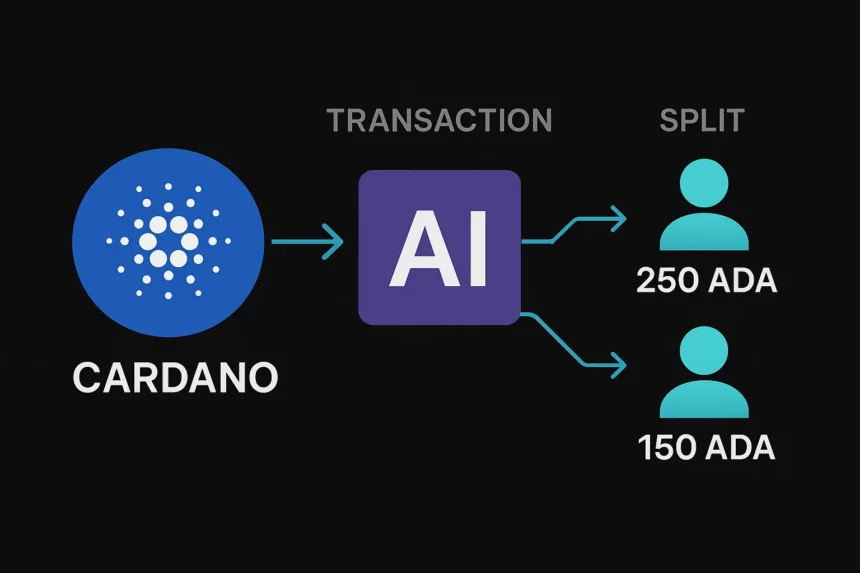
The Cardano blockchain experienced an unprecedented disruption on November 21, 2025, when an AI-generated transaction triggered a critical network vulnerability, causing the price of ADA to crash by 16%. The incident, which resulted in the blockchain temporarily splitting into two competing chains, has drawn the attention of the Federal Bureau of Investigation (FBI), marking one of the first instances where a proof-of-stake network split has led to federal law enforcement involvement. Within the first few hours of the Cardano AI transaction split, major cryptocurrency exchanges suspended ADA deposits and withdrawals, while the development team scrambled to deploy emergency patches. This event has raised serious questions about blockchain security, the role of artificial intelligence in cryptocurrency operations, and the resilience of even the most established blockchain networks.
Cardano AI Transaction Split
The Cardano AI transaction split began at approximately 08:00 UTC when a malformed delegation transaction bypassed validation checks on newer node versions while being correctly rejected by older infrastructure. This created incompatible ledger states across the network, with the transaction passing validation on newer node versions but being rejected by older ones. The result was a rare chain split that fragmented the $14 billion blockchain into two parallel chains operating simultaneously.
The anomaly closely mirrored an issue seen on Cardano’s testnet just a day prior, suggesting the exploit was tested in advance before being unleashed on mainnet. This revelation intensified concerns that the incident was not merely an accident but a deliberate attack on the network’s integrity.
What Caused the Network Split?
The technical root of the Cardano network split lay in a three-year-old bug in the node software that had remained dormant until this specific transaction exposed it. According to incident details published by Intersect, Cardano’s ecosystem governance body, the problem began when a single delegation transaction, created with AI-generated instructions, passed validation on newer node versions but was rejected by older ones.
The perpetrator, operating under the pseudonym “Homer J,” publicly admitted responsibility for the transaction. The developer claimed they were “dumb enough to rely on AI’s instructions” when attempting to test the damaging transaction. This raises critical questions about the growing reliance on artificial intelligence tools in blockchain development and the potential risks they pose when used without proper testing protocols.
The FBI Investigation Into Cardano’s Chain Split
Perhaps the most significant aspect of this incident is the FBI investigation Cardano now faces. Founder Charles Hoskinson quickly escalated the matter to federal authorities, treating the network disruption as a potential cybercrime rather than a simple technical error.
Cardano founder Charles Hoskinson dismissed the explanation, calling the event a deliberate attack and confirming that the FBI had been alerted. In his public statements, Hoskinson claimed the individual had spent months searching for ways to damage Input Output Global’s (IOG) reputation and that the attack was “absolutely personal.”
Legal Implications of Blockchain Attacks
The involvement of the FBI in the Cardano investigation sets a significant precedent for the cryptocurrency industry. Hoskinson confirmed direct communication with the FBI, contributing to what appears to be one of the first recorded instances where a proof-of-stake network split has led to law enforcement involvement.
This escalation highlights how blockchain disruptions are increasingly being treated as serious cybercrimes. Tampering with a network that processes millions of dollars in transactions daily can have far-reaching economic consequences, potentially qualifying as a federal offense under U.S. cybercrime laws.
ADA Price Crash: Market Impact Analysis
The immediate market reaction to the Cardano chain split was severe. Following the chain split, ADA dropped as much as 16% before stabilizing near $0.41. This sharp decline erased hundreds of millions of dollars in market capitalization within hours.
Exchange Response to the Crisis
Major cryptocurrency exchanges moved swiftly to protect their platforms and users. Major exchanges responded by pausing ADA operations as they monitored which chain would achieve consensus dominance.
The ADA price drop during this period reflected investor uncertainty about which chain would ultimately achieve consensus and whether user funds might be at risk. Block explorers struggled to interpret the fractured network, displaying contradictory data that further amplified confusion.
Technical Deep Dive: How the Malformed Transaction Worked
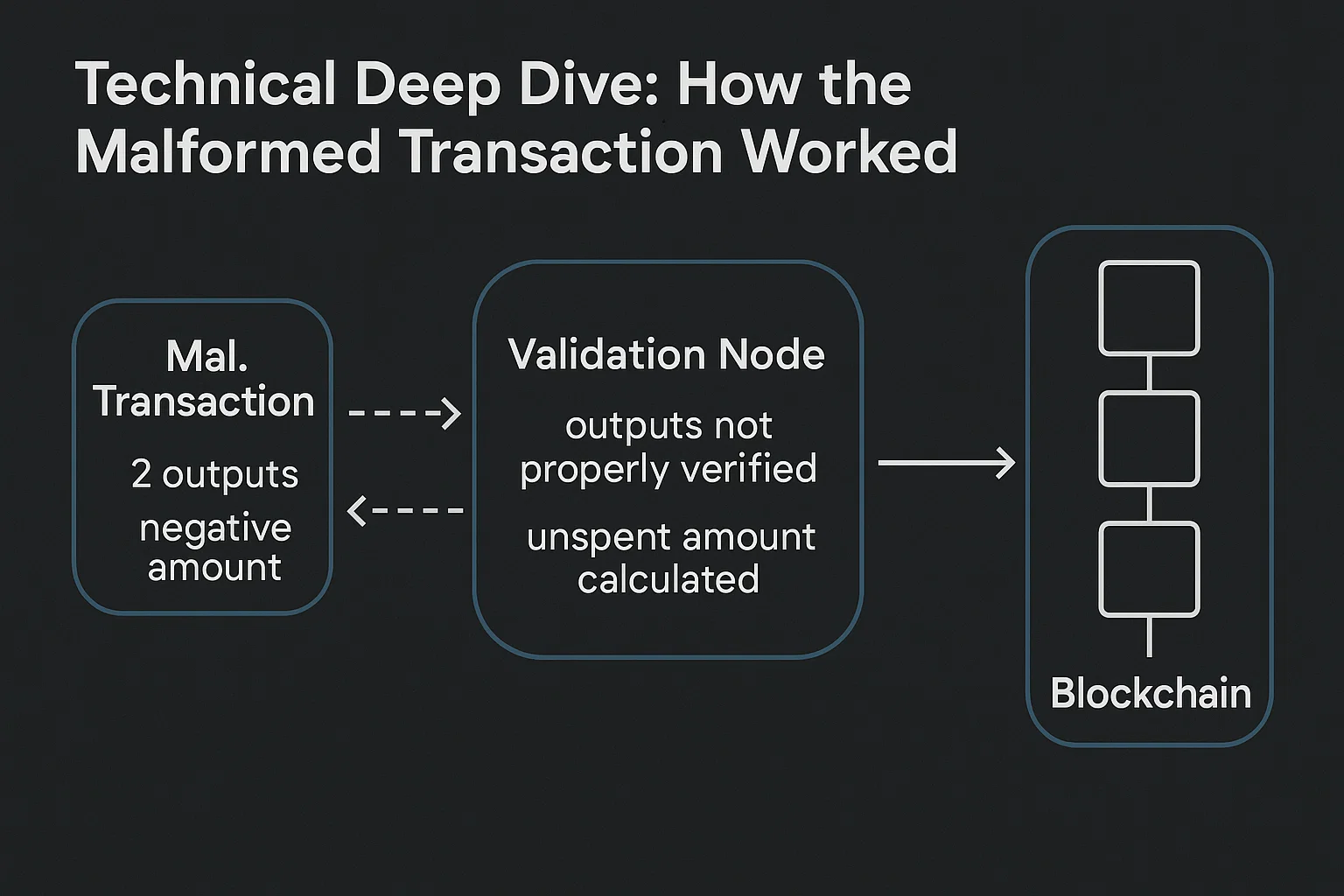
To fully understand the Cardano AI transaction split, it’s essential to examine the technical mechanics behind the malformed transaction. The exploit targeted a vulnerability in how different node versions processed delegation transactions.
The Role of AI-Generated Code
The use of AI-generated code in this incident represents a concerning trend in blockchain development. The perpetrator admitted to using artificial intelligence to generate instructions for creating the malformed transaction, highlighting both the power and potential dangers of AI tools in cryptocurrency operations.
The developer characterized their actions as a “careless” testing accident, saying they were “dumb enough to rely on AI’s instructions on how to block all traffic in/out of their Linux server without properly testing it on testnet first”. This admission underscores the critical importance of proper testing protocols and the potential consequences of deploying AI-generated code without adequate verification.
Node Version Discrepancies
The blockchain vulnerability exploited in this attack stemmed from inconsistencies between different node software versions. Older nodes correctly rejected the malformed transaction as invalid, while newer versions incorrectly accepted it. This created a divergence in the blockchain’s history, with some nodes following one version of events and others following a competing version.
Cardano’s Emergency Response and Recovery
Despite the severity of the situation, the Cardano development team demonstrated remarkable efficiency in addressing the crisis. Engineers from IOG, Intersect, the Cardano Foundation, and EMURGO coordinated a patch within three hours, advising stake pool operators to upgrade their nodes so the chain could realign.
Rapid Deployment of Hotfixes
The Cardano emergency response involved deploying emergency hotfix software in node versions 10.5.2 and 10.5.3. Once the exploit was active, the network response was immediate. Cardano developers moved quickly and released emergency hotfix software, allowing stake pool operators to install updates and restore chain consistency.
This swift action prevented what could have been a prolonged network disruption. By the following day, November 22, the network had naturally reconverged through consensus, with the majority of stake pool operators upgrading to the patched versions.
Community Coordination Efforts
The Cardano community response played a crucial role in the network’s recovery. Stake pool operators worked around the clock to implement the necessary updates, demonstrating the strength of Cardano’s decentralized governance model. The incident showcased how a well-coordinated community can respond effectively to critical threats, even in the face of a sophisticated attack.
Charles Hoskinson’s Response and Controversy
Charles Hoskinson, Cardano’s founder, took an aggressive stance in responding to the incident. His decision to involve the FBI and characterize the event as a “premeditated attack” sparked debate within the cryptocurrency community.
Claims of Deliberate Attack
Hoskinson described the event as a deliberate attack from a disgruntled stake pool operator, claiming the user had spent months searching for ways to damage the reputation of Input Output Global (IOG). He pointed to the individual’s activity in a Discord group called “Fake Fred,” where allegedly anti-IOG sentiment had been brewing.
Developer Resignation Fallout
The aggressive legal approach taken by Hoskinson had unintended consequences within the development team. Hoskinson’s decision to involve federal investigators led one IOG employee to publicly declare their resignation from the Cardano development firm. The employee, identified as a Plutus language developer, expressed concerns that future development mistakes could now lead to legal consequences.
This resignation highlights a critical tension in blockchain development: balancing the need to protect networks from malicious actors while maintaining an environment where developers feel safe to innovate and occasionally make mistakes.
Comparing This Incident to Other Blockchain Failures
The Cardano blockchain split is not the first time a major network has experienced critical failures, but it stands out for several reasons.
Historical Context of Chain Splits
Chain splits are relatively rare in established blockchain networks. Bitcoin has experienced hard forks that resulted in new cryptocurrencies like Bitcoin Cash, but these were intentional protocol changes rather than vulnerabilities exploited by attackers. Ethereum’s DAO hack in 2016 led to a contentious hard fork, but that situation differed significantly from Cardano’s technical vulnerability.
Cardano suffered its first major chain split in eight years of operation on Nov. 21, making this incident particularly notable given the network’s otherwise strong track record. The rarity of such events in proof-of-stake networks underscores the unprecedented nature of this attack.
Long-Term Implications for Cardano and ADA
While the immediate crisis has passed, the long-term effects on Cardano remain to be seen. The incident has sparked important discussions about network security, governance, and the role of AI in blockchain development.
Impact on Cardano’s Reputation
The token has remained down more than 30% over the past two weeks as investors await further updates from investigators and core developers. This sustained price decline suggests the market remains cautious about potential vulnerabilities in the Cardano network.
However, some analysts argue that the rapid response and transparent communication during the crisis could ultimately strengthen investor confidence. The network’s ability to resolve the split within 24 hours demonstrates resilience and effective governance structures.
The Role of AI in Cryptocurrency Security
The AI-generated transaction at the center of this incident raises broader questions about artificial intelligence’s role in blockchain development and security.
Benefits and Risks of AI in Blockchain
Artificial intelligence offers tremendous potential for improving blockchain operations, from optimizing transaction processing to identifying security vulnerabilities. However, this incident illustrates the risks when AI-generated code is deployed without proper human oversight and testing.
Developers increasingly rely on AI tools like ChatGPT, GitHub Copilot, and specialized blockchain AI assistants to write smart contracts and create transactions. While these tools can accelerate development, they may also introduce subtle bugs or vulnerabilities that human developers might not immediately recognize.
What This Means for Crypto Investors

For investors holding ADA cryptocurrency or considering positions in Cardano, this incident provides several important lessons.
Risk Assessment and Diversification
The ADA market volatility following this incident demonstrates that even established blockchain networks face unexpected technical risks. Investors should maintain diversified portfolios and avoid overexposure to any single cryptocurrency, regardless of its market capitalization or perceived stability.
Evaluating Network Resilience
The rapid recovery from the Cardano network split offers a positive signal about the project’s technical capabilities and governance structure. Networks that can quickly identify, patch, and recover from critical vulnerabilities may prove more resilient long-term investments than those that struggle with crisis management.
Regulatory Considerations
The FBI investigation into this incident signals increasing regulatory scrutiny of cryptocurrency networks. Investors should consider how potential regulatory actions might impact their holdings and stay informed about developing legal frameworks for blockchain operations.
Community Reactions and Social Media Response
The Cardano community’s response to the incident was mixed, with reactions ranging from supportive to critical across various social media platforms.
Defense of the Network
Many Cardano supporters emphasized the network’s quick recovery and the fact that no user funds were lost during the incident. Intersect’s report states that the network did not stall, with block production continuing on both chains throughout the incident, and at least some identical transactions appearing on both chains.
Criticism and Concerns
Critics questioned whether the incident revealed deeper vulnerabilities in Cardano’s architecture and whether the network’s recovery was as smooth as officials claimed. Some users joked about the incident, with detractors suggesting that the disruption went relatively unnoticed because of limited real-world Cardano usage.
The “Homer J” Confession
The public confession by the individual responsible for the malformed transaction added a human element to the technical crisis. A few hours after the network split, an X account operating under the name “Homer J” stepped forward and said they were responsible for the faulty transaction. The apology sparked debate about accountability, intent, and appropriate consequences for blockchain disruptions.
Technical Analysis: Proof-of-Stake Vulnerabilities
This incident raises important questions about proof-of-stake security and whether this consensus mechanism faces unique vulnerabilities compared to proof-of-work systems.
Cardano’s Ouroboros Protocol
Cardano operates using a proof-of-stake consensus mechanism called Ouroboros. Cardano uses a proof-of-stake (PoS) protocol named Ouroboros, which is in contrast to Bitcoin and Ethereum, which use uuseproof-of-work protocols. This mechanism selects validators based on the amount of ADA they stake, offering energy efficiency advantages over proof-of-work systems.
Chain Split Mechanics in PoS Networks
Chain splits in proof-of-stake networks operate differently from proof-of-work systems. Rather than competing through computational power, PoS chains rely on stake-weighted voting to determine the canonical chain. When nodes disagree about transaction validity, as happened in this incident, the network can temporarily fragment until consensus mechanisms resolve the discrepancy.
Regulatory Landscape and Crypto Crime
The FBI’s involvement in cryptocurrency investigations is becoming increasingly common as digital assets gain mainstream adoption and criminals target blockchain networks.
Growing Federal Interest in Crypto Security
Federal law enforcement agencies have expanded their cryptocurrency investigation capabilities in recent years, recognizing that blockchain networks constitute critical financial infrastructure. The FBI has established dedicated cryptocurrency units and hired blockchain forensics experts to investigate crimes ranging from ransomware payments to network attacks.
Network Performance Metrics
Throughout the incident, Intersect emphasized that block production continued on both chains throughout the incident. This meant that while the network was fragmented, it did not completely halt—a distinction that Hoskinson emphasized repeatedly in his public statements.
Expert Opinions and Industry Analysis
Cryptocurrency security experts and blockchain analysts have weighed in on the Cardano incident with varied perspectives.
Security Researcher Perspectives
Many security researchers praised Cardano’s transparency in handling the crisis and the speed of the coordinated response. The public disclosure of technical details allows other blockchain projects to learn from the incident and potentially identify similar vulnerabilities in their own codebases.
However, some experts questioned whether the three-year-old bug should have been discovered earlier through more comprehensive testing and code audits. The fact that the vulnerability remained dormant for years raises questions about code review processes across the blockchain industry.
Market Analyst Views
Financial analysts analyzing the ADA price impact noted that the 16% decline, while significant, could have been much worse. The relatively quick recovery and transparent communication likely prevented a more severe market panic that might have resulted in 30-40% losses.
Some analysts view the incident as a “stress test” that Cardano ultimately passed, demonstrating its ability to handle crises. Others remain concerned about unknown vulnerabilities that may still exist in the network’s codebase.
Preventing Future Blockchain Attacks
The lessons from Cardano’s crisis extend across the entire cryptocurrency ecosystem, offering valuable insights for other blockchain projects.
Enhanced Testing Protocols
Blockchain projects must implement more comprehensive testing protocols that specifically examine compatibility between different software versions. Edge cases like the one exploited in this attack should receive particular attention during quality assurance processes.
Bug Bounty Programs
Robust bug bounty programs incentivize security researchers to identify and responsibly disclose vulnerabilities before malicious actors can exploit them. Cardano and similar projects should consider expanding their bounty programs with substantial rewards for critical vulnerability discoveries.
AI Integration Guidelines
As artificial intelligence becomes increasingly integrated into blockchain development, the industry needs clear guidelines for its safe use. These should include mandatory testing requirements, human oversight obligations, and liability frameworks for AI-generated code that causes network disruptions.
The Intersection of AI and Blockchain Security
The role of artificial intelligence in blockchain development is rapidly evolving, with this incident highlighting both opportunities and risks.
AI as a Security Tool
When properly deployed, AI can significantly enhance blockchain security by identifying patterns that might indicate attacks, optimizing network performance, and even predicting potential vulnerabilities before they’re exploited. Machine learning algorithms can analyze vast amounts of blockchain data to detect anomalies that human analysts might miss.
AI as Security Risk
Conversely, as demonstrated by this incident, AI can introduce new vulnerabilities when used without proper safeguards. The ease with which AI tools can generate complex code creates the temptation to skip rigorous testing procedures, potentially introducing bugs that compromise network integrity.
Cardano’s Path Forward
Despite the challenges posed by the Cardano blockchain split, the project’s future remains focused on continued development and security improvements.
Planned Upgrades and Enhancements
Cardano continues to follow its structured development roadmap, with upcoming phases focused on scalability improvements and enhanced smart contract capabilities. The development team has indicated that security enhancements resulting from this incident will be incorporated into future upgrades without disrupting the planned timeline.
Governance Evolution
The incident has sparked discussions about evolving Cardano’s governance model to better address security concerns while protecting developers who identify vulnerabilities through legitimate research. Finding the right balance between accountability and innovation remains a key challenge.
Community Trust Building
Rebuilding complete community confidence after the ADA price crash requires continued transparency, regular security updates, and demonstrated commitment to preventing similar incidents. The Cardano Foundation has committed to publishing comprehensive post-mortem analyses and implementing recommended security improvements.
Conclusion
The Cardano AI transaction split and subsequent FBI investigation represent a watershed moment for the cryptocurrency industry. This incident demonstrates that even well-established blockchain networks with strong track records can face unexpected vulnerabilities, particularly as artificial intelligence becomes increasingly integrated into development processes.
The 16% ADA crash following the network split underscores the significant financial consequences of blockchain security failures. However, Cardano’s rapid recovery and transparent handling of the crisis offer valuable lessons for the entire cryptocurrency ecosystem. The ability to coordinate emergency responses across multiple organizations, deploy critical patches within hours, and reconverge to a single chain demonstrates the resilience of well-designed blockchain networks.
Read More: Comprehensive Crypto News Insights Covering Market Trends