


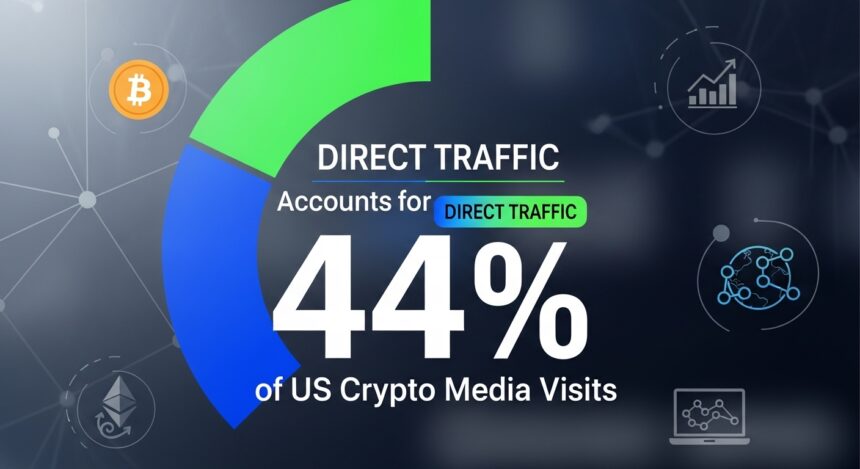
Instead of discovering articles through search engines or social media platforms, a growing share of users is intentionally navigating directly to trusted crypto news outlets. As market volatility, regulatory pressure, and audience fatigue reshape the crypto media landscape, the fact that direct traffic accounts for 44% of total visits underscores the importance of brand loyalty and habitual readership. This trend suggests that while casual interest may be waning, committed crypto audiences remain deeply engaged with a select group of publications they trust for accurate and timely information.
Direct Traffic in Crypto Media
To appreciate why direct traffic accounts for 44% is such a significant figure, it’s important to understand what direct traffic actually represents. Direct traffic typically includes users who type a website’s URL directly into their browser, use bookmarks, or click links from private channels such as email newsletters or messaging apps.
In the context of crypto media, direct traffic signals strong brand recognition. Readers are not stumbling upon content by chance; they are actively seeking out specific platforms for crypto news, market insights, and analysis. This behavior reflects a mature audience that knows where it prefers to get information, even as overall interest in crypto news fluctuates.
Direct Traffic Accounts for 44% of US Crypto Media Visits
The statistic that direct traffic accounts for 44% of US crypto media visits stands out against a backdrop of declining overall traffic. While total visits to crypto news sites have dropped compared to previous market cycles, the proportion of direct visits has increased, indicating a consolidation of audience attention.
Rather than browsing multiple sources or relying on social media feeds, users appear to be narrowing their focus to a handful of established crypto publications. This trend benefits outlets with strong editorial voices, consistent publishing schedules, and recognizable brands. For publishers, this shift emphasizes the value of long-term audience relationships over short-term traffic spikes driven by viral content.
The Decline in Overall Crypto Media Traffic
Even as direct traffic accounts for 44%, total traffic to US crypto media sites has been trending downward. This decline can be attributed to several factors, including prolonged market downturns, reduced retail investor participation, and growing skepticism following high-profile industry failures.
During bull markets, crypto media often experiences surges in search and social traffic as new users seek quick information. In contrast, bear markets tend to filter out casual readers, leaving behind a more dedicated but smaller audience. This context makes the rise in direct traffic even more meaningful, as it suggests that core readers remain engaged despite broader declines.
Market Cycles and Audience Behavior
Crypto media traffic has always been closely tied to market cycles. When prices rise rapidly, curiosity-driven searches increase. When markets stagnate or fall, attention wanes. The fact that direct traffic accounts for 44% during a period of reduced interest indicates that loyal readers continue to seek updates regardless of price action. These users are more likely to value in-depth analysis, regulatory coverage, and long-form reporting over sensational headlines. This shift reinforces the idea that crypto media is transitioning from hype-driven coverage to more mature journalism.
Why Direct Traffic Signals Strong Brand Loyalty
One of the most important implications of direct traffic accounts for 44% is what it reveals about brand loyalty. Direct visits are a strong indicator that readers trust a publication enough to return repeatedly without external prompts. In an era dominated by algorithm-driven discovery, cultivating direct traffic is increasingly difficult. Social platforms frequently change distribution rules, and search engine updates can dramatically impact visibility. Direct traffic, by contrast, is largely immune to these fluctuations. For crypto media outlets, this stability can be a crucial competitive advantage.
What Direct Traffic Accounts for 44% Means for Publishers
When direct traffic accounts for 44% of visits, publishers gain greater control over their audience relationships. They are less dependent on third-party platforms and more capable of building sustainable business models through subscriptions, memberships, and newsletters. This shift also affects editorial strategy. Publishers may prioritize depth, accuracy, and consistency over click-driven content designed solely to perform well on social media or search engines. In the long term, this approach can strengthen credibility and differentiate high-quality outlets from lower-effort competitors.
The Role of Newsletters and Push Notifications
Although classified as direct traffic, many visits originate from newsletters and browser notifications. These channels have become increasingly important as direct traffic accounts for 44% of overall visits.

Email newsletters, in particular, allow crypto media brands to maintain direct communication with readers. Unlike social feeds, email inboxes are not governed by opaque algorithms, making them a reliable distribution channel. As traffic patterns evolve, publishers that invest in owned channels are better positioned to retain audience attention.
Trust as a Key Driver of Direct Visits
Trust plays a central role in why direct traffic accounts for 44% of crypto media visits. The crypto industry has been marred by misinformation, scams, and exaggerated claims, making credibility more valuable than ever. Readers gravitate toward outlets with transparent reporting, verified sources, and balanced perspectives. Over time, this trust translates into habitual reading behavior, where users bypass intermediaries and go straight to their preferred sites. This dynamic rewards publications that consistently prioritize journalistic integrity.
How Search and Social Traffic Are Changing
The rise in direct visits does not exist in isolation. As direct traffic accounts for 44%, search and social traffic have declined as proportions of total visits. Search interest in crypto-related keywords has cooled, and social media platforms have deprioritized crypto content amid regulatory scrutiny. These shifts reduce the effectiveness of traditional traffic acquisition strategies. Publishers that once relied heavily on trending topics and viral posts now face diminishing returns from those channels. Direct traffic, therefore, emerges as a more dependable foundation for audience engagement.
Direct Traffic Accounts for 44% Amid a Changing Media Landscape
The broader digital media landscape provides important context for why direct traffic accounts for 44% of US crypto media visits. Across industries, publishers are grappling with declining referral traffic from major platforms. As users grow wary of algorithmic feeds and misinformation, many are choosing to bookmark trusted sources. This behavior aligns with trends seen in finance, technology, and political news, where direct visits are also increasing. Crypto media is not an outlier but part of a wider realignment in online content consumption.
The Impact on Advertising and Revenue Models
From a business perspective, the fact that direct traffic accounts for 44% has significant implications for monetization. Advertisers often value direct audiences more highly, as they tend to be more engaged and spend more time on site.
Higher engagement metrics can translate into better ad performance and stronger negotiating positions with sponsors. Additionally, loyal readers are more likely to convert into paying subscribers or premium members. This makes direct traffic not only a metric of audience quality but also a driver of financial sustainability.
Subscription Growth and Reader Support
As crypto media matures, subscription-based models are gaining traction. The trend where direct traffic accounts for 44% supports this shift, as direct readers are more inclined to support outlets they value. Subscription revenue reduces reliance on volatile advertising markets and aligns publisher incentives with reader interests. This model encourages deeper reporting and long-term thinking rather than chasing short-term traffic spikes. For readers, subscriptions also serve as a signal of trust and commitment to quality journalism.
Challenges Facing Crypto Media Despite Strong Direct Traffic
While direct traffic accounts for 44% is a positive indicator, it does not eliminate the challenges facing crypto media. A smaller overall audience means publishers must do more with less, balancing costs against revenue. Competition remains intense, and maintaining reader loyalty requires continuous investment in content quality and user experience. Additionally, regulatory uncertainty around crypto advertising and sponsorships can complicate monetization strategies. Direct traffic provides resilience, but it is not a cure-all.
How Publishers Can Strengthen Direct Traffic Further
Given that direct traffic accounts for 44%, many publishers are seeking ways to increase this share even further. Building habit-forming content, consistent publishing schedules, and recognizable editorial voices can encourage repeat visits.
User experience also plays a critical role. Fast load times, clean design, and intuitive navigation make it easier for readers to return directly. Over time, these factors compound, reinforcing direct traffic growth. The goal is to become a default destination for crypto news rather than just another link in a feed.
The Importance of Community and Engagement
Community-building efforts can further amplify the trend where direct traffic accounts for 44%. Comment sections, forums, and exclusive member content create a sense of belonging that encourages repeat visits. When readers feel part of a community, they are more likely to bookmark a site, subscribe to updates, and recommend it to others. This organic growth is especially valuable in a niche industry like crypto. Engagement transforms passive readers into active participants.
Long-Term Outlook for Crypto Media Traffic
Looking ahead, the pattern where direct traffic accounts for 44% may become even more pronounced. As the crypto industry stabilizes and matures, speculative interest may continue to decline, leaving behind a more knowledgeable and committed audience. This audience is likely to favor depth over hype and trust over novelty. Publications that adapt to this reality can thrive, even with lower overall traffic volumes. In this sense, the current shift may represent not a decline but an evolution of crypto media.
Conclusion
The insight that direct traffic accounts for 44% of US crypto media visits offers a clear signal about the future of crypto journalism. While overall traffic may be falling, the strength of direct visits highlights enduring reader loyalty and trust. For publishers, this trend emphasizes the importance of brand-building, audience relationships, and high-quality reporting. For readers, it reflects a desire for reliable information in an industry often clouded by noise.