


Bitcoin slumps nearly 20% from its all-time high, sending shockwaves through the digital asset ecosystem and raising concerns among investors worldwide. This significant price correction has prompted leading market strategists to issue warnings that the world’s largest cryptocurrency could experience even steeper declines in the coming weeks. The sharp pullback from Bitcoin’s recent peak has reignited debates about market sustainability, regulatory pressures, and the broader economic factors influencing cryptocurrency valuations. As traders scramble to reassess their positions and risk management strategies, understanding the underlying causes of this Bitcoin slump has become crucial for anyone involved in digital asset markets.
Current Bitcoin Price Correction
The recent market turbulence represents one of the most significant retracements Bitcoin has experienced since reaching its latest all-time high. When Bitcoin slumps nearly 20%, it typically triggers a cascade of market reactions that extend beyond the flagship cryptocurrency itself, affecting the entire digital asset landscape.
What Triggered the Bitcoin Decline?
Multiple factors have converged to create the perfect storm for this substantial price correction. Market analysts point to a combination of macroeconomic pressures, profit-taking by large institutional holders, and growing regulatory uncertainty as primary catalysts for the downturn.
The Bitcoin price correction began as early investors who accumulated positions at lower price points decided to realize profits near the all-time high. This selling pressure created a domino effect, triggering stop-loss orders and automated trading algorithms that accelerated the downward momentum. Additionally, concerns about tightening monetary policy and rising interest rates have made risk assets like Bitcoin less attractive to traditional investors seeking safer havens for their capital.
Historical Context of Bitcoin Market Corrections
To properly contextualize the current situation where Bitcoin slumps nearly 20%, it’s essential to examine historical precedents. Bitcoin has experienced numerous corrections throughout its existence, some far more severe than the current drawdown. During the 2017 bull run, Bitcoin corrected by more than 30% multiple times before ultimately reaching its then-all-time high near $20,000.
The 2021 market cycle saw even more dramatic volatility, with Bitcoin experiencing several corrections exceeding 50% from local peaks. These historical patterns suggest that substantial price retracements are a normal feature of Bitcoin’s price discovery process rather than anomalies. However, each correction brings unique circumstances and catalysts that differentiate it from previous downturns.
Market Strategist Warnings: Could Bitcoin Correct Further?
Leading market strategists have issued increasingly cautious outlooks following the initial Bitcoin slump, suggesting that the current correction may only be the beginning of a more prolonged downturn. These warnings carry significant weight given the analysts’ track records and access to sophisticated market intelligence.
Technical Analysis Points to Deeper Declines
From a technical perspective, several key indicators suggest that Bitcoin could correct quite a bit more before finding sustainable support. The Relative Strength Index (RSI) remains elevated despite the recent decline, indicating that the asset may still be overextended from its recent rally. Additionally, Bitcoin has broken below critical moving average support levels that previously acted as reliable floors during corrections.
Chart patterns emerging on multiple timeframes show the potential for continued downside pressure. The formation of a head-and-shoulders pattern on the daily chart, combined with declining trading volume during attempted rallies, suggests that buyer exhaustion may be setting in. Technical traders are eyeing support zones 25-30% below current price levels as potential areas where significant buying interest could emerge.
Fundamental Factors Supporting the Correction Thesis
Beyond technical indicators, fundamental factors also support the thesis that the Bitcoin correction could extend further. The cryptocurrency market’s correlation with traditional risk assets has increased significantly, making Bitcoin vulnerable to broader market selloffs driven by macroeconomic concerns.
Rising regulatory scrutiny from governments worldwide has created additional uncertainty. Recent announcements from financial regulators regarding cryptocurrency oversight and potential restrictions on certain trading activities have dampened investor sentiment. These regulatory headwinds could continue pressuring prices as market participants adjust to an evolving legal landscape.
Impact on the Broader Cryptocurrency Market

When Bitcoin slumps nearly 20%, the ripple effects throughout the cryptocurrency ecosystem are substantial and far-reaching. As the dominant cryptocurrency by market capitalization, Bitcoin’s price movements heavily influence sentiment and valuations across thousands of alternative cryptocurrencies.
Altcoin Performance During Bitcoin Corrections
Alternative cryptocurrencies, commonly known as altcoins, typically experience even more severe corrections when Bitcoin declines. This amplified volatility stems from several factors, including lower liquidity, higher beta correlations with Bitcoin, and increased risk aversion among investors during market downturns.
During the current Bitcoin price correction, many prominent altcoins have declined by 30-50% from their recent peaks, substantially outpacing Bitcoin’s percentage loss. Ethereum, the second-largest cryptocurrency, has demonstrated relative strength compared to smaller-cap alternatives but has still experienced significant pressure. This pattern aligns with historical norms where altcoins suffer disproportionately during Bitcoin-led market corrections.
Trading Volume and Market Liquidity Concerns
The Bitcoin slump has coincided with concerning trends in trading volume and market liquidity. Exchange data shows that spot trading volume has declined significantly from peak levels, suggesting reduced market participation and potentially thinner order books. This liquidity deterioration can exacerbate price volatility and make it easier for large orders to move markets dramatically.
Derivatives markets have also experienced heightened activity, with open interest in Bitcoin futures and options reaching elevated levels. While derivatives can provide valuable hedging tools, excessive leverage in the system increases the risk of liquidation cascades that can accelerate downward price movements when the market turns bearish.
What Investors Should Know About Market Corrections
For both seasoned traders and newcomers to cryptocurrency markets, understanding how to navigate periods when Bitcoin slumps nearly 20% is crucial for long-term success and capital preservation.
Risk Management During Volatile Periods
The current Bitcoin correction serves as a stark reminder of the importance of proper risk management in cryptocurrency investing. Market participants who allocated appropriate position sizes and maintained diversified portfolios are better positioned to weather the storm than those who concentrated heavily in digital assets near market peaks.
Professional traders emphasize the importance of setting predetermined exit points and adhering to disciplined stop-loss strategies. Emotional decision-making during periods of extreme volatility often leads to poor outcomes, whether through panic selling at market bottoms or attempting to catch falling knives during continued declines. Establishing clear risk parameters before entering positions helps remove emotion from trading decisions during turbulent market conditions.
Dollar-Cost Averaging and Accumulation Strategies
For long-term investors who believe in Bitcoin’s fundamental value proposition, periods when Bitcoin slumps nearly 20% can present accumulation opportunities. Dollar-cost averaging (DCA) strategies, which involve making regular purchases regardless of price, can be particularly effective during extended corrections by reducing the impact of short-term volatility on overall entry prices.
Historical data demonstrates that investors who maintained consistent accumulation strategies through previous Bitcoin corrections have generally been rewarded over multi-year timeframes. However, this approach requires conviction in the underlying thesis, adequate liquidity to continue purchasing during extended downturns, and the psychological fortitude to maintain discipline when market sentiment is overwhelmingly negative.
Regulatory Environment and Its Impact on Bitcoin
The regulatory landscape has emerged as a critical factor influencing the current Bitcoin price correction, with government actions and policy announcements contributing significantly to market uncertainty.
Global Regulatory Developments
Regulatory authorities across major economies have intensified their focus on cryptocurrency markets in recent months. The United States Securities and Exchange Commission (SEC) has pursued enforcement actions against several cryptocurrency platforms and projects, creating uncertainty about which digital assets might be classified as securities requiring registration.
European regulators have advanced comprehensive cryptocurrency legislation through the Markets in Crypto-Assets (MiCA) framework, which establishes new compliance requirements for cryptocurrency service providers. While regulatory clarity can ultimately benefit the industry, the transition period often creates short-term uncertainty that contributes to market volatility and conditions where Bitcoin slumps nearly 20%.
Institutional Investment and Regulatory Concerns
Institutional investors, who have become increasingly significant participants in cryptocurrency markets, are particularly sensitive to regulatory developments. Many institutional allocators operate within strict compliance frameworks that require clear regulatory guidance before committing significant capital to emerging asset classes.
The current regulatory uncertainty has caused some institutional investors to reduce their cryptocurrency exposure or pause new allocations until the landscape becomes clearer. This withdrawal of institutional buying pressure has contributed to the conditions enabling the current Bitcoin correction, as these large market participants provided significant support during previous rallies.
Macroeconomic Factors Influencing Bitcoin’s Price
Understanding the broader macroeconomic context is essential for comprehending why Bitcoin slumped nearly 20% and evaluating the potential for further declines.
Interest Rates and Monetary Policy
Central bank monetary policy has emerged as one of the most influential factors affecting Bitcoin and other risk assets. As central banks worldwide have shifted from accommodative policies to more restrictive stances aimed at combating inflation, the opportunity cost of holding non-yielding assets like Bitcoin has increased.
Higher interest rates make traditional fixed-income investments more attractive on a risk-adjusted basis, drawing capital away from speculative assets like cryptocurrencies. The Federal Reserve’s monetary policy trajectory remains a critical variable that market participants monitor closely, as unexpected hawkish shifts could contribute to further Bitcoin price corrections.
Inflation Concerns and Bitcoin as a Hedge
Bitcoin’s narrative as an inflation hedge has been tested during recent periods of elevated inflation. While some advocates argue that Bitcoin’s fixed supply makes it an effective store of value against currency debasement, the asset’s price performance during recent inflationary periods has been mixed.
The disconnect between Bitcoin’s theoretical value proposition as an inflation hedge and its actual price behavior during inflationary periods has created debate among investors. Some market participants have questioned whether Bitcoin truly functions as “digital gold” or whether it behaves more like a speculative technology stock that performs poorly during monetary tightening cycles.
Technical Support Levels and Price Targets
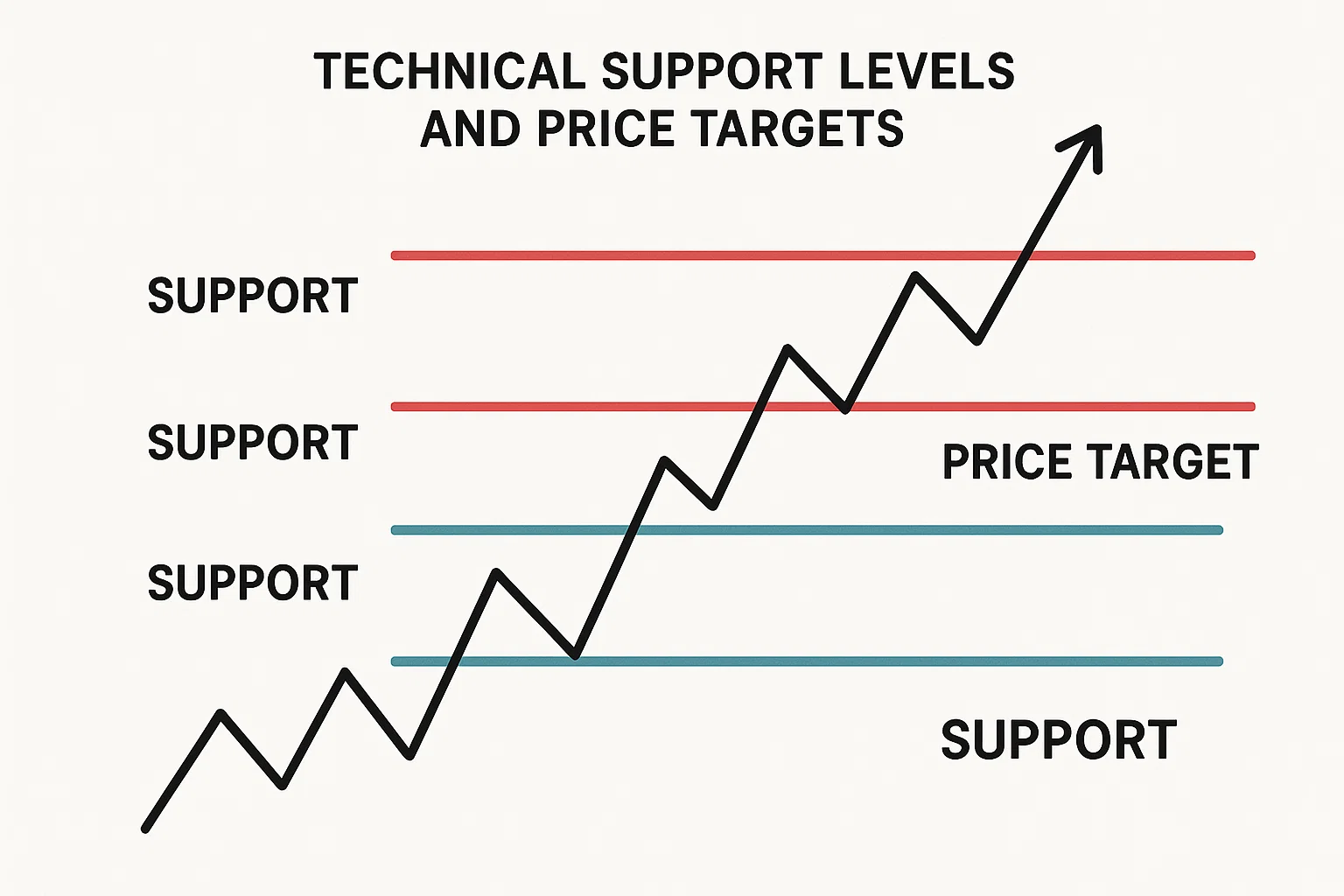
As Bitcoin slumps nearly 20%, technical analysts are closely monitoring key price levels that could determine whether the correction has run its course or if further declines lie ahead.
Critical Support Zones
Technical traders have identified several crucial support levels that could influence Bitcoin’s near-term price trajectory. The first major support zone sits approximately 25% below the all-time high, representing a price area where significant accumulation occurred during previous rallies. If this level fails to hold, the next substantial support lies another 10-15% lower, corresponding to the 200-day moving average on the daily chart.
These technical support levels often become self-fulfilling prophecies as traders place orders near psychologically significant price points and historically important levels. However, in particularly bearish market conditions, even strong technical support can be overwhelmed by persistent selling pressure, allowing the Bitcoin correction to extend beyond what historical patterns might suggest.
Resistance Levels for Potential Rebounds
Should Bitcoin stabilize and attempt to recover from the current Bitcoin slump, several resistance levels could cap upside potential. The most immediate resistance sits at the price level where the correction began, as traders who are underwater on recent purchases may use rallies back to their entry points as opportunities to exit positions at breakeven.
Higher resistance zones exist at previous all-time high levels and psychological round numbers that tend to attract significant selling interest. Breaking through these resistance levels would require substantial buying volume and a shift in overall market sentiment from bearish to bullish, conditions that typically take time to develop following significant corrections.
On-Chain Metrics and Blockchain Analysis
Blockchain data provides valuable insights into investor behavior and market dynamics during periods when Bitcoin slumps nearly 20%, offering clues about whether the correction is nearing completion or could extend further.
Exchange Flow Analysis
On-chain analysts monitor the flow of Bitcoin between personal wallets and cryptocurrency exchanges to gauge investor sentiment. Large transfers of Bitcoin to exchanges typically signal potential selling pressure, as investors move coins to trading platforms in preparation for liquidating positions. Conversely, significant outflows from exchanges suggest accumulation, as investors withdraw Bitcoin to long-term storage.
Recent data show mixed signals, with some periods of increased exchange inflows coinciding with price declines, but overall exchange balances remaining relatively stable. This suggests that while some investors have taken advantage of the Bitcoin correction to exit positions, there hasn’t been widespread panic selling that would indicate capitulation.
Long-Term Holder Behavior
The behavior of long-term Bitcoin holders provides important context for evaluating the severity and potential duration of the current Bitcoin price correction. Long-term holders, typically defined as addresses that have held Bitcoin for more than 155 days, often provide market stability by maintaining their positions through volatility.
Analysis of long-term holder supply shows that these diamond-handed investors have largely maintained their positions despite the recent decline, suggesting underlying conviction in Bitcoin’s long-term value proposition. Historically, when long-term holders begin distributing significant amounts of Bitcoin, it often signals market tops and the potential for extended corrections. The absence of such distribution currently provides some optimism that the worst of the selloff may be limited.
Mining Industry Impact and Hash Rate Considerations
The Bitcoin slump has implications beyond just traders and investors, significantly affecting the cryptocurrency mining industry that secures the network and processes transactions.
Mining Profitability During Price Corrections
When Bitcoin slumps nearly 20%, mining profitability declines proportionally, assuming energy costs and network hash rate remain constant. Smaller mining operations with higher cost structures may find themselves mining at a loss, potentially forcing them to suspend operations until Bitcoin’s price recovers or to liquidate their Bitcoin holdings to cover operational expenses.
This potential selling pressure from miners adds to the overall supply of Bitcoin hitting the market during corrections. However, the recent halving event reduced the rate of new Bitcoin issuance, meaning that miner selling represents a smaller percentage of daily trading volume than in previous market cycles.
Network Hash Rate as a Health Indicator
Bitcoin’s network hash rate, which measures the total computational power securing the blockchain, provides insights into miner confidence despite the Bitcoin correction. If hash rate remains stable or continues growing during price corrections, it suggests that miners maintain long-term conviction and are willing to operate through periods of reduced profitability.
Recent hash rate data shows resilience, with the metric remaining near all-time highs despite the price decline. This indicates that the mining industry, equipped with more efficient hardware and often secured by longer-term financing arrangements, is better positioned to weather volatility than in previous market cycles.
Comparison to Previous Bitcoin Market Cycles
Examining historical precedents helps contextualize the current situation where Bitcoin slumps nearly 20% and provides a perspective on potential outcomes.
2017 Bull Market Parallels
The 2017 Bitcoin bull market featured numerous corrections exceeding 30% before the ultimate peak near $20,000. Each correction prompted predictions of the bull market’s end, yet Bitcoin ultimately recovered and reached new highs before entering a prolonged bear market in 2018. The current Bitcoin price correction shares some characteristics with 2017 mid-cycle corrections, including similar percentage drawdowns and comparable sentiment shifts.
However, important differences exist between then and now. The 2017 market was driven primarily by retail speculation, while current markets feature significant institutional participation. Additionally, Bitcoin’s infrastructure, including regulated futures markets and custody solutions, has matured considerably, potentially providing more stability during corrections.
2021 Market Cycle Lessons
The 2021 market cycle offers more recent lessons about Bitcoin’s behavior during bull markets. That cycle featured a double-peak structure, with Bitcoin reaching an initial high in April 2021, correcting by approximately 50%, then rallying to a new all-time high in November 2021 before entering a bear market. The current Bitcoin slump could potentially represent either a mid-cycle correction similar to April 2021 or the beginning of a more extended bear market.
Distinguishing between these scenarios requires monitoring multiple indicators, including macroeconomic conditions, regulatory developments, institutional adoption trends, and on-chain metrics. The challenge for investors is that these signals often become clear only in retrospect, after the market has already moved significantly.
Investment Strategies for Different Market Conditions
Successful navigation of periods when Bitcoin slumps nearly 20% requires flexible strategies adapted to evolving market conditions.
Bull Market Correction Strategies
If the current decline represents merely a correction within an ongoing bull market, strategies that capitalize on temporary weakness while maintaining overall bullish exposure may be appropriate. These might include scaling into positions gradually as Bitcoin declines, using options strategies to hedge downside risk while maintaining upside exposure, or focusing on fundamentally strong projects that have corrected more severely than warranted by their underlying prospects.
Maintaining discipline about position sizing remains crucial even when operating under a bullish thesis. Markets can remain irrational longer than investors can remain solvent, and corrections can extend beyond what seems reasonable based on historical patterns or fundamental analysis.
Bear Market Protection Approaches
If the Bitcoin correction evolves into a full-scale bear market, protection strategies become paramount. These might include raising cash levels substantially, implementing strict stop-loss disciplines, or shifting focus to very short-term trading strategies that profit from volatility rather than directional moves.
Some sophisticated investors use bear markets to accumulate positions for the next cycle, but this approach requires significant capital reserves, strong conviction, and the ability to endure potentially years of unrealized losses. For most investors, reducing risk exposure and preserving capital takes priority during confirmed bear markets.
Expert Opinions and Market Sentiment Analysis
Understanding what market experts and analysts are saying about the Bitcoin slump provides valuable context, though investors should maintain critical thinking rather than blindly following any single viewpoint.
Bullish Perspectives
Despite the correction, some prominent Bitcoin advocates maintain bullish long-term outlooks. They argue that Bitcoin’s fundamental value proposition as a decentralized, censorship-resistant store of value remains intact regardless of short-term price fluctuations. These bulls point to continued adoption by corporations, growing infrastructure development, and Bitcoin’s fixed supply schedule as factors that will ultimately drive prices higher.
Long-term Bitcoin holders often view periods when Bitcoin slumps nearly 20% as opportunities rather than threats, citing historical patterns where patient accumulation during corrections has been rewarded over multi-year timeframes. However, critics argue that past performance doesn’t guarantee future results and that Bitcoin faces unprecedented challenges as it matures and attracts increased regulatory scrutiny.
Bearish Counterarguments
Bearish analysts warn that the current Bitcoin correction could be the beginning of a more severe and prolonged downturn. They cite overvaluation concerns, regulatory risks, competition from alternative cryptocurrencies, and macroeconomic headwinds as factors that could pressure Bitcoin’s price substantially lower.
Some bears argue that Bitcoin’s rally to all-time highs was fueled by unsustainable factors like excessive leverage, speculative mania, and pandemic-era monetary stimulus that is now being withdrawn. According to this view, Bitcoin needs to undergo a substantial repricing to reflect more realistic long-term valuations and current market conditions.
Preparing for Various Market Scenarios
Given the uncertainty surrounding whether Bitcoin’s slump of nearly 20% will prove to be a buying opportunity or the start of a deeper decline, preparing for multiple scenarios is prudent.
Scenario Planning Framework
Investors should develop explicit plans for various potential outcomes, including a rapid recovery to new all-time highs, an extended sideways consolidation, or a deeper correction into bear market territory. Each scenario should have predetermined action steps, including adjustments to position sizes, reallocation among different assets, or changes to risk management parameters.
This scenario planning process helps remove emotion from decision-making during volatile periods. When markets are moving rapidly and sentiment is extreme, having predetermined plans reduces the likelihood of reactive decisions made in response to fear or greed rather than rational analysis.
Portfolio Diversification Principles
The Bitcoin price correction underscores the importance of diversification even within cryptocurrency portfolios. While Bitcoin dominates the market by capitalization, other cryptocurrencies offer different risk-return profiles and may perform differently during various market conditions. Additionally, maintaining exposure to traditional assets provides balance and reduces overall portfolio volatility.
However, diversification should be thoughtful rather than haphazard. During market corrections, correlations between assets often increase, meaning that supposed diversification benefits can disappear precisely when they’re needed most. True diversification requires holding assets with genuinely different drivers of return rather than simply owning many similar assets.
Long-Term Outlook and Future Catalysts
Despite the near-term challenges evident in the Bitcoin slump, examining potential future catalysts helps maintain perspective on longer-term possibilities.
Institutional Adoption Trajectory
Institutional adoption continues to develop despite current market volatility. Major financial institutions have launched cryptocurrency services, and applications for Bitcoin exchange-traded funds continue advancing through regulatory processes. Should institutional adoption accelerate, it could provide substantial support for Bitcoin prices over multi-year timeframes.
However, institutional adoption is neither guaranteed nor uniformly positive. Institutions bring both capital and increased regulatory scrutiny, and their involvement could fundamentally change cryptocurrency markets in ways that are difficult to predict. The net effect of institutional participation remains a subject of debate among market observers.
Technological Developments
Bitcoin’s underlying technology continues evolving through developments like the Lightning Network for scaling payments and the Taproot upgrade that enhanced privacy and smart contract capabilities. These technological improvements could expand Bitcoin’s utility and adoption over time, potentially supporting higher valuations.
Critics counter that Bitcoin’s relatively conservative approach to protocol changes leaves it vulnerable to competition from more innovative blockchain platforms. Whether Bitcoin’s stability and security focus ultimately proves more valuable than aggressive innovation remains an open question that will influence its long-term trajectory.
Conclusion
As Bitcoin slumps nearly 20% from its all-time high, market participants face critical decisions about how to position themselves for an uncertain future. The warnings from market strategists that Bitcoin could correct significantly further underscore the need for careful risk management and realistic expectations about cryptocurrency market volatility.
History demonstrates that Bitcoin corrections, even severe ones, have ultimately proven to be temporary setbacks within a longer-term upward trajectory. However, past patterns don’t guarantee future performance, and each market cycle brings unique challenges and circumstances. Investors must balance the fear of missing out on potential recoveries against the very real risk of catching falling knives during extended downtrends.
Read More: Bitcoin News Trends Tech and Regulations Shaping Crypto