


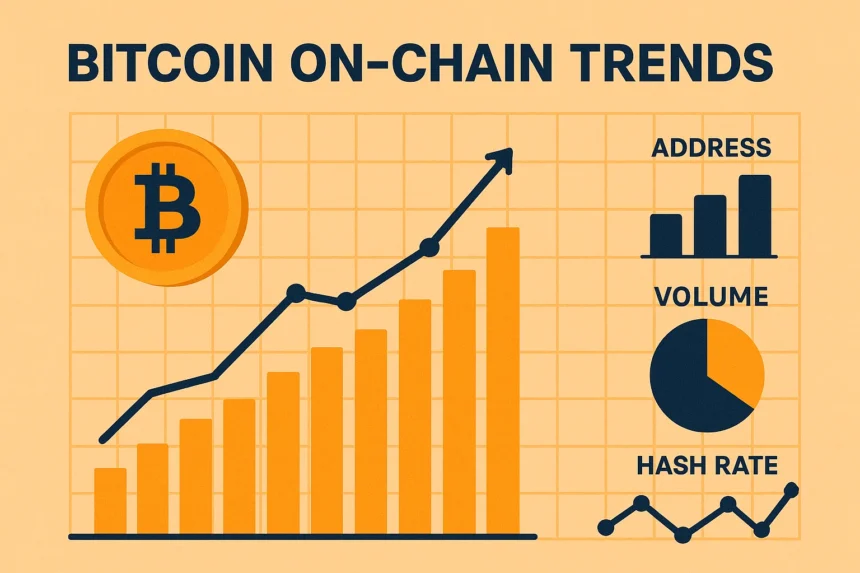
However, Bitcoin on-chain trends are painting an increasingly optimistic picture that suggests the worst may indeed be behind us. By examining blockchain data, network metrics, and historical patterns, we can identify compelling evidence that Bitcoin is positioning itself for a potential recovery phase. This comprehensive analysis delves into the key on-chain indicators that are signaling a market shift, providing investors with data-driven insights into Bitcoin’s current trajectory and future potential.
Bitcoin On-Chain Analysis
Before diving into specific trends, it’s essential to understand what Bitcoin on-chain trends actually represent. On-chain analysis involves examining data recorded directly on the Bitcoin blockchain, including transaction volumes, wallet movements, exchange flows, and mining activity. Unlike traditional market analysis that relies solely on price action and trading volume, on-chain metrics provide a transparent view into the actual behavior of network participants.
This blockchain-based approach offers unique insights because Bitcoin’s public ledger records every transaction permanently. Analysts can track when large holders (whales) are accumulating or distributing, identify when miners are selling their reserves, and determine whether long-term holders are confident or panicking. These Bitcoin network metrics have historically provided early warning signals before major price movements, making them invaluable tools for serious investors.
The beauty of on-chain analysis lies in its objectivity. While sentiment and speculation dominate headlines, blockchain data reveals what participants are actually doing with their Bitcoin. This creates a powerful framework for understanding market cycles and identifying potential turning points before they become obvious in price charts.
Key Bitcoin On-Chain Trends Indicating Recovery
Exchange Reserves Reaching Multi-Year Lows
One of the most significant Bitcoin on-chain trends suggesting recovery is the continued decline in exchange reserves. When investors withdraw Bitcoin from exchanges to cold storage or hardware wallets, it typically indicates a long-term holding mentality rather than preparation for selling. Current data shows exchange balances have dropped to levels not seen since 2018, with major platforms experiencing steady outflows.
This accumulation trend is particularly noteworthy because it reduces available supply for immediate selling pressure. When fewer coins sit on exchanges ready to be sold, the market becomes less liquid in the short term, which can amplify upward price movements when demand increases. Historical patterns show that significant exchange outflows have preceded major bull runs, including the rallies in 2017 and 2020-2021.
The sustained nature of these outflows, continuing for several consecutive months, suggests this isn’t a temporary phenomenon but rather a fundamental shift in holder behavior. Institutional investors and sophisticated traders increasingly prefer self-custody solutions, removing their Bitcoin from exchange custody and signaling confidence in long-term value appreciation.
Miner Capitulation Appears Complete
Mining activity provides crucial insights into Bitcoin network health and market bottoms. Miners represent forced sellers who must regularly liquidate Bitcoin to cover operational expenses like electricity and equipment costs. During bear markets, weaker miners with higher costs are forced to shut down operations and sell their reserves, creating capitulation events.
Recent on-chain indicators suggest this miner capitulation phase has concluded. Hash rate—the computational power securing the network—has recovered strongly after bottoming earlier in the year. When the hash rate stabilizes and begins climbing, it indicates that only the most efficient miners with the lowest costs remain operational. These surviving miners are less likely to engage in panic selling, reducing baseline selling pressure.
Additionally, the miner reserve metric shows that Bitcoin held by mining pools has stabilized after months of decline. This suggests miners have completed their necessary liquidations and are now comfortable holding their newly minted coins rather than immediately selling them. Historically, the end of miner capitulation has marked important inflection points, signaling that one of the market’s most consistent sources of selling pressure has been neutralized.
HODL Waves Showing Long-Term Conviction
HODL waves—a visualization of Bitcoin’s age distribution across different wallet cohorts—reveal fascinating insights about holder conviction. Current Bitcoin on-chain trends show that an increasing percentage of the total supply hasn’t moved in over a year, with some cohorts showing inactivity exceeding three to five years.
This metric is significant because it demonstrates that, despite price volatility, long-term holders refuse to sell. These “diamond hands” have weathered previous bear markets and understand Bitcoin’s cyclical nature. When the percentage of old coins continues growing during price weakness, it indicates that seasoned investors are viewing current levels as attractive accumulation opportunities rather than exits.
The current HODL wave distribution resembles patterns observed in late 2015 and early 2019—both periods that marked the end of bear markets and the beginning of new bull cycles. This supply dynamics pattern suggests that weak hands have been shaken out, and Bitcoin is increasingly concentrated in the hands of conviction-driven holders unlikely to panic sell during normal market fluctuations.
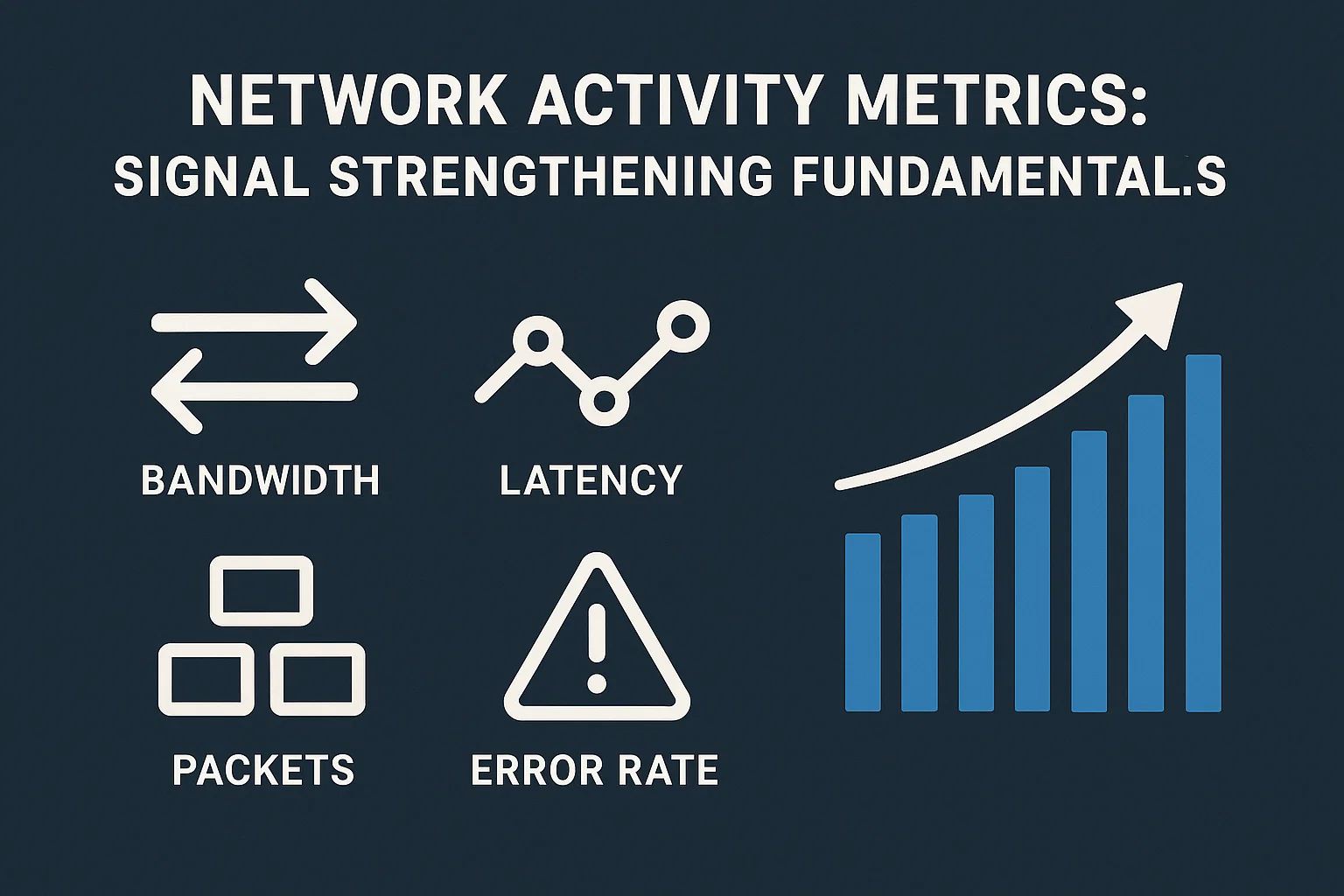
Network Activity Metrics Signal Strengthening Fundamentals
Active Addresses Showing Organic Growth
The number of active Bitcoin addresses—unique wallets sending or receiving transactions—provides insight into network adoption and usage. After declining during the deepest phase of the market downturn, active addresses have shown consistent recovery over recent months. This uptick in Bitcoin network activity suggests renewed interest from both retail and institutional participants.
Unlike exchange-driven price speculation, increases in active addresses indicate genuine network utilization. Users are transacting, moving funds between wallets, and engaging with Bitcoin’s core value proposition as a decentralized monetary network. This organic growth in network participation creates a stronger foundation for sustainable price appreciation compared to leverage-fueled rallies.
Furthermore, the ratio of active addresses to price has reached historically attractive levels, suggesting Bitcoin may be undervalued relative to its actual usage. When network activity increases while prices remain suppressed, it creates a fundamental disconnect that markets eventually correct through price appreciation. This cryptocurrency blockchain analysis reveals that Bitcoin’s utility is expanding even as prices consolidate, a healthy divergence for long-term prospects.
Transaction Volume Composition Improving
Not all Bitcoin on-chain trends are created equal, and the composition of transaction volume matters significantly. Recent months have seen a shift away from small, speculative transactions toward larger, institutional-sized movements. This change in transaction patterns suggests that serious capital—rather than retail speculation—is increasingly flowing into Bitcoin.
Large transactions exceeding $100,000 in value have increased in frequency, while micro-transactions have declined as a percentage of total volume. This shift indicates that Bitcoin is maturing as an asset class, attracting professional investors and corporations rather than purely speculative retail traders chasing quick profits. Institutional adoption tends to be more stable and long-term oriented, providing a firmer foundation for price stability and growth.
Additionally, the percentage of transactions conducted over the Lightning Network—Bitcoin’s layer-2 scaling solution—continues to expand. This demonstrates that Bitcoin’s ecosystem is evolving beyond just a store of value, with growing utility for everyday payments and micropayments. Enhanced functionality increases Bitcoin’s value proposition and broadens its potential user base.
Supply Dynamics Favoring Price Appreciation
Illiquid Supply Reaches Record Highs
One of the most bullish Bitcoin on-chain trends involves the concept of “illiquid supply”—coins held by entities unlikely to sell regardless of price action. This category includes long-term holders, lost coins, and Bitcoin held by entities with strong conviction. Analysis shows that illiquid supply has reached all-time highs, with over 75% of all Bitcoin now classified as illiquid or highly illiquid.
This dramatic reduction in readily available supply creates powerful dynamics when demand increases. With fewer coins available for purchase on exchanges and the open market, any significant influx of buying pressure must chase a diminishing supply pool. This supply-demand imbalance historically produces explosive price movements when market sentiment shifts from bearish to bullish.
The relentless growth of illiquid supply throughout the bear market demonstrates that major holders have used price weakness as an accumulation opportunity. Rather than becoming discouraged, sophisticated investors have recognized Bitcoin’s long-term value proposition and positioned themselves for the next cycle. This Bitcoin accumulation by strong hands reduces volatility over time and supports higher baseline prices.
Whale Accumulation Patterns Turning Bullish
Whale wallets—addresses holding substantial Bitcoin quantities—provide important signals about smart money positioning. Recent Bitcoin whale movements reveal a clear pattern of accumulation rather than distribution. Addresses holding between 100 and 10,000 BTC have consistently added to their positions during price weakness, suggesting confidence from large players.
These sophisticated holders typically have access to superior information, analytical resources, and longer investment horizons than retail traders. When whale accumulation accelerates during bear markets, it often precedes broader market recoveries by several months. The current accumulation trend among large holders mirrors patterns observed before previous bull runs, suggesting these players are positioning for anticipated appreciation.
Importantly, whale accumulation has continued even during brief price rallies, indicating these buyers aren’t simply bottom-fishing but rather executing systematic accumulation strategies. This persistent buying from large holders provides price support and absorbs selling pressure from weaker participants, gradually building a stronger foundation for sustainable upward movement.
Comparing Current Trends to Historical Cycles
Similarities to Previous Market Bottoms
Understanding where we are in Bitcoin’s market cycle requires examining how current Bitcoin on-chain trends compare to previous bear market conclusions. The 2015 and 2018-2019 bear markets provide valuable precedents, both showing remarkably similar on-chain patterns before major recoveries began.
In both historical cases, exchange reserves declined significantly, miner capitulation completed, HODL waves extended, and accumulation addresses grew—precisely the patterns we’re observing today. The current cycle’s on-chain metrics have now aligned with these historical bottoming patterns for several consecutive months, suggesting we may be in a similar late-bear or early-bull transition phase.
Additionally, the duration of the current bear market aligns with historical precedents. Bitcoin’s bear markets have historically lasted between 12 and 18 months from peak to trough, with extended bottoming processes adding several additional months. The current cycle’s timeline fits this historical pattern, supporting the thesis that we’re approaching or have already passed the worst phase.
Key Differences in This Cycle
While similarities exist, several unique factors distinguish the current cycle. Institutional adoption has reached unprecedented levels, with public companies, hedge funds, and even nation-states holding Bitcoin. This professional capital tends to be less reactive to short-term volatility and more focused on long-term value, potentially creating more stable market conditions.
Regulatory clarity has also improved significantly compared to previous cycles. While challenges remain, many jurisdictions have established clearer frameworks for Bitcoin taxation, custody, and trading. This regulatory maturation reduces uncertainty and facilitates greater institutional participation, supporting the positive signals in Bitcoin network metrics.
Finally, Bitcoin’s infrastructure has evolved substantially. Layer-2 solutions, custody services, derivatives markets, and integration with traditional finance have all matured. This enhanced ecosystem makes Bitcoin more accessible and functional, potentially accelerating adoption and supporting higher valuations in future bull markets.
What These Trends Mean for Investors

Strategic Implications for Portfolio Positioning
The convergence of positive Bitcoin on-chain trends creates important considerations for portfolio strategy. For long-term investors, current metrics suggest that accumulation at these levels may prove attractive with the benefit of hindsight. History shows that the best buying opportunities often occur when sentiment is pessimistic but on-chain fundamentals are strengthening—precisely the current environment.
However, on-chain analysis doesn’t provide specific price targets or precise timing. While blockchain data can identify market phases and probable directions, short-term volatility remains inevitable. Investors should view positive on-chain trends as supporting evidence for long-term positioning rather than signals for leveraged trading or short-term speculation.
Diversification remains crucial despite encouraging metrics. While Bitcoin market recovery appears increasingly likely based on on-chain evidence, cryptocurrency remains a volatile and evolving asset class. Prudent investors maintain balanced portfolios that can withstand continued volatility while capturing upside potential if the recovery thesis proves correct.
Risk Factors to Monitor
Despite positive on-chain signals, investors must remain aware of potential risks that could disrupt the recovery narrative. Macroeconomic conditions, including interest rate policies, inflation trends, and broader financial market stability, significantly influence cryptocurrency prices. Adverse developments in traditional markets could create selling pressure that overwhelms positive on-chain fundamentals in the short term.
Regulatory developments also warrant close monitoring. While the regulatory environment has generally improved, negative policy changes in major markets could impact Bitcoin adoption and price. Investors should stay informed about legislative proposals and regulatory enforcement actions that might affect cryptocurrency markets.
Technical factors could also create temporary setbacks. Major security incidents, exchange failures, or technical vulnerabilities could shake confidence and create selling pressure despite strong underlying fundamentals. Maintaining awareness of both on-chain metrics and broader market dynamics provides the most comprehensive view of Bitcoin’s investment landscape.
Additional On-Chain Metrics Worth Watching
Realized Price and MVRV Ratio
Beyond the primary trends discussed, several additional on-chain indicators provide valuable context. Realized price—the average price at which all Bitcoin last moved on-chain—represents the aggregate cost basis of all holders. When the market price falls below the realized price, it historically indicates extreme undervaluation and marks attractive entry points.
The MVRV (Market Value to Realized Value) ratio compares current market capitalization to realized capitalization, revealing whether Bitcoin is overvalued or undervalued relative to holder cost basis. Current readings suggest Bitcoin is trading near fair value to slightly undervalued—a neutral to positive signal that differs from the extreme overvaluation seen at previous cycle peaks.
Spent Output Profit Ratio (SOPR)
SOPR measures the profit ratio of coins moved on-chain, indicating whether sellers are realizing gains or losses. When SOPR hovers around 1.0, it suggests breakeven selling, typically observed during accumulation phases. Recent SOPR readings align with historical bottoming patterns, supporting the thesis that capitulation has concluded and the market is transitioning to recovery.
Entity-Adjusted Metrics
Advanced cryptocurrency blockchain analysis now accounts for entity-adjusted metrics, which group addresses controlled by the same entities. These refined metrics provide more accurate pictures of actual holder behavior by reducing distortions from internal movements between addresses controlled by single entities. Entity-adjusted dormancy and velocity metrics currently show patterns consistent with long-term accumulation and reduced speculative activity.
The Broader Context: Bitcoin’s Evolving Narrative
From Speculation to Store of Value
Bitcoin’s maturation as an asset class influences how we interpret Bitcoin on-chain trends. The network is gradually transitioning from a speculative trading vehicle to a recognized store of value, similar to digital gold. This evolution means that on-chain patterns increasingly reflect long-term holding behavior rather than short-term speculation.
This narrative shift supports the positive interpretation of current metrics. Growing illiquid supply, extended HODL waves, and exchange outflows all align with Bitcoin’s emerging role as a long-term savings technology and inflation hedge. As this narrative solidifies, it attracts different investor types—pension funds, treasury reserves, and ultra-high-net-worth individuals—who further reinforce holding behavior.
Global Adoption Tailwinds
International developments provide additional context for positive on-chain signals. Countries experiencing currency instability increasingly turn to Bitcoin as an alternative, driving organic adoption beyond speculative investment. This utility-driven demand creates fundamental value that purely speculative assets lack, supporting long-term appreciation potential.
Furthermore, technological improvements continue to expand Bitcoin’s capabilities. Lightning Network growth, Taproot adoption, and developing smart contract functionality enhance Bitcoin’s utility without compromising its core security and decentralization. These improvements broaden Bitcoin’s value proposition and potentially accelerate the adoption trends visible in on-chain metrics.
Conclusion
The comprehensive examination of Bitcoin on-chain trends reveals a market that has likely weathered its worst storm and is positioning for potential recovery. From declining exchange reserves and completed miner capitulation to extended HODL waves and whale accumulation, the blockchain data tells a consistent story of strengthening fundamentals and growing conviction among serious holders.
While on-chain analysis provides powerful insights, it represents just one analytical framework among many. Successful Bitcoin investing requires synthesizing on-chain metrics with macroeconomic analysis, technical indicators, and risk management principles. The current convergence of positive on-chain signals doesn’t guarantee immediate price appreciation, but it does suggest that the probabilities have shifted favorably for patient, long-term investors.
Read More: Latest Bitcoin News Today Updates & Market Analysis 2025